Updated: July 2026
Macro Secrets: A Step-by-Step Guide to Photographing Pygmy Seahorses
Raja Ampat Photo Tour is a curated Indonesia luxury tourism experience offered by Rajaampat Phototour Co.: handpicked routes, vetted operators, transparent pricing, and 24/7 concierge support across Indonesia.
- What makes Raja Ampat Photo Tour a premium experience.
- How Rajaampat Phototour Co. curates exclusive access and concierge logistics.
- Routes, seasons, and pricing transparency — no hidden fees.
Macro Secrets: A Step-by-Step Guide to Photographing Pygmy Seahorses
The pygmy seahorse is the undisputed jewel in the crown of Raja Ampat’s macro world. Smaller than a fingernail and a master of camouflage, capturing a compelling image of this creature is a pinnacle achievement for any underwater photographer. It demands patience, precision, and a deep respect for the subject. This guide distils years of experience from our professional-led expeditions, offering a clear methodology for successfully photographing these cryptic marine marvels on your next Raja Ampat photo tour. Coral Triangle initiative
The Elusive Subject: Understanding Pygmy Seahorse Behaviour
Success begins long before you press the shutter. It starts with understanding the animal itself. Raja Ampat is home to several species of pygmy seahorse, most notably the Bargibant’s pygmy seahorse (Hippocampus bargibanti) and Denise’s pygmy seahorse (Hippocampus denise). Each has a specific, symbiotic relationship with a particular type of gorgonian sea fan—Bargibant’s on Muricella gorgonians, their pink or yellow tubercles perfectly matching the fan’s polyps, and the smoother-skinned Denise’s on a wider variety of fans. West Papua tourism
These animals are exceptionally sedentary and territorial, often spending their entire adult lives on a single sea fan. This is both a blessing and a curse for photographers. While they are unlikely to flee, they are incredibly sensitive to disturbance. Bright lights, excessive movement, and physical contact can cause significant stress, leading them to turn away from the camera or, in the worst case, abandon their host. Our guides on any Raja Ampat photo tour are trained to locate these subjects with minimal impact and to manage diver interaction, ensuring the animal’s welfare remains the absolute priority. Understanding this delicate balance is the first, and most critical, step.
Gearing Up: Essential Macro Equipment for Pygmy Seahorses
Photographing a subject measured in millimetres requires specialised equipment. While a standard macro lens is a starting point, achieving frame-filling, high-quality images of pygmy seahorses demands a more refined setup. The goal is to achieve greater than 1:1 magnification while maintaining a comfortable working distance to avoid startling the subject.
Core Camera and Lens Combination
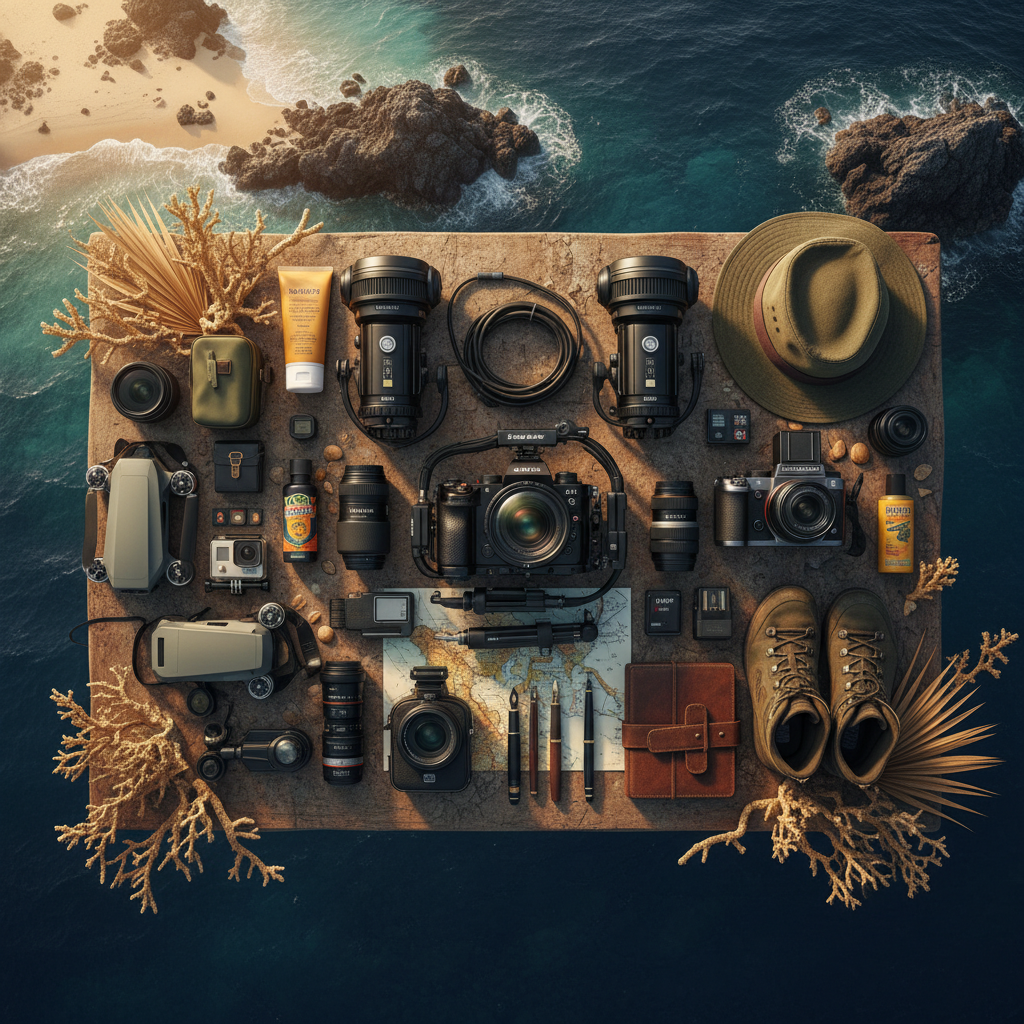
A camera with a high-resolution sensor, whether DSLR or mirrorless, will provide the detail needed for significant crops if necessary. The cornerstone of your rig is a dedicated macro lens, typically in the 90mm to 105mm focal range. This length provides an ideal working distance—close enough for magnification but far enough not to crowd the seahorse. While a 60mm macro lens can work, it requires you to get significantly closer, increasing the risk of disturbing the animal and its fragile gorgonian home.
Magnification and Lighting
To truly isolate the pygmy, a wet-mount diopter (or super macro converter) is essential. High-quality diopters like the Nauticam SMC-1/SMC-2 or CMC-1/CMC-2 are indispensable tools on our expeditions. They attach to the outside of your housing port and significantly increase magnification. Lighting is equally critical. A pair of powerful, fast-recycling strobes (such as those from Inon, Sea&Sea, or Retra) is non-negotiable. Dual strobes allow for creative lighting, eliminate harsh shadows, and provide the even illumination necessary to bring out the seahorse’s subtle textures. Finally, a strong, narrowly-focused snoot or a constant-on focus light is vital for achieving critical focus without blinding the subject with a wide, disruptive beam.
The Approach: Dive Technique and Subject Interaction
Your conduct in the water is more important than any piece of gear. The reefs of Misool and the Dampier Strait are pristine, and preserving them is a collective responsibility. Excellent buoyancy is the foundation of all good underwater photography, and it is paramount when shooting pygmy seahorses. You must be able to hold your position in the water column, often in a slight current, without any contact with the reef. Kicking up silt can ruin the shot and stress marine life. We recommend a finning technique like the frog kick to minimise disturbance.
Once your guide has located a seahorse, the approach must be slow and deliberate. Rushing in will only cause the animal to turn its back. Approach from the front of the gorgonian fan, staying level with the subject. Use a stainless steel pointer or “muck stick” to anchor yourself, but only on a dead piece of rock or sand, far from any living coral. Never, under any circumstances, touch, move, or manipulate the sea fan. A well-executed Raja Ampat photo tour prioritises ethical practices; the perfect shot is never worth harming the subject or its environment. Limit your time with a single animal to a few minutes, allowing it to rest before the next photographer moves in.
Dialling It In: Camera Settings for Perfect Exposure and Focus
With your equipment ready and your position stable, it is time to configure your camera. These settings are a starting point; be prepared to adjust based on conditions, your specific gear, and the creative vision for your final image.
Aperture and Depth of Field
For a subject this small, depth of field is incredibly shallow. Start with an aperture between f/11 and f/18. This range typically provides enough depth of field to get the critical parts of the seahorse—especially its eye—in sharp focus, while allowing the background to soften pleasingly. Shooting “wide open” (e.g., f/2.8) will result in an impossibly thin plane of focus, while stopping down too far (e.g., f/22 or smaller) can introduce softness due to lens diffraction.
Shutter Speed, ISO, and Strobe Power
Your shutter speed is primarily used to control the ambient light and create the desired background. For a dark or black background, use your camera’s maximum sync speed (often between 1/160s and 1/250s). This ensures the camera’s sensor is only exposed to the light from your strobes. For a hint of blue or green from the surrounding water, slow your shutter speed down. Keep your ISO as low as possible, typically ISO 100 or 200, to maximise image quality and dynamic range. The main exposure on the seahorse itself should be controlled entirely by your strobe power and position.
Achieving Critical Focus
Focus is the single greatest challenge. Use a single, small autofocus point and place it directly on the seahorse’s eye. Many photographers find success using “back-button focus,” which separates the focus function from the shutter release, allowing you to lock focus and then recompose slightly. For the ultimate in precision, switch to manual focus. Modern mirrorless cameras with focus peaking (which highlights sharp areas in a chosen colour) make this an incredibly effective technique for static subjects like a pygmy seahorse.
Composition and Lighting: Crafting an Artistic Image
A technically perfect but poorly composed image is forgettable. The goal is to create a portrait that tells a story. Position yourself at eye-level with the seahorse. Shooting from above results in a flat, “record shot” perspective. Getting low and level creates a more intimate and engaging portrait.
Pay attention to the background. Is it cluttered with distracting elements? Try to reposition yourself (without disturbing the reef) to isolate the gorgonian against the clean blue of the water or a dark, shadowy crevice. Apply the rule of thirds, placing the seahorse off-centre and giving it “space” to look into within the frame. Lighting is key to separating your subject. Position your strobes to the side and slightly in front of the subject. This “inward lighting” technique minimises backscatter and sculpts the seahorse with light and shadow, revealing its incredible texture. Avoid flat, head-on lighting which can wash out detail.
Mastering these techniques takes practice, which is the very essence of a dedicated Raja Ampat photo tour. Unlike a standard dive holiday, our itineraries are structured to provide the time and repeated opportunities necessary to move beyond simple documentation and into the realm of artistry, with expert guidance at every step.
Post-Processing: Bringing Your Pygmy to Life
The work is not finished when you surface. Thoughtful post-processing in software like Adobe Lightroom or Capture One is the final step in realising your vision. The primary goal is to enhance, not fabricate. Start with a decisive crop to strengthen your composition and remove distracting elements from the edges of the frame.
Next, adjust the white balance to ensure colours are accurate—the pinks and yellows of the seahorse and its host fan should be vibrant but natural. Subtly increase contrast and clarity to make the subject “pop” from the background. Be cautious with the sharpening tool; apply it selectively to the seahorse, particularly the eye, rather than globally to the entire image. The most common mistake is over-processing. A light touch is all that is required to polish a well-captured image and bring out the remarkable detail you worked so hard to capture beneath the waves of Raja Ampat.
Frequently Asked Questions
What is the best time of year to photograph pygmy seahorses in Raja Ampat?
Pygmy seahorses can be found year-round in Raja Ampat. However, the primary diving season, from October to April, offers the calmest sea conditions and best visibility. This makes it easier to hold steady for macro shots and provides optimal conditions for finding their host gorgonians on sites around the Fam Islands or in the rich waters of Misool. Our tour schedules are aligned with these peak months.
How do your guides find something so small?
Our guides possess years of local experience and have an almost supernatural ability to spot pygmy seahorses. They know which specific gorgonian fans are likely to host them and can identify the subtle texture differences that give away their location. This expertise is a core component of our Raja Ampat photo tour, saving you valuable dive time and ensuring you see these magnificent creatures.
Is a snoot necessary for pygmy seahorse photography?
While not strictly necessary, a snoot can elevate your pygmy seahorse photography to a professional level. It allows you to precisely control the light, illuminating only the seahorse and its immediate surroundings. This creates a dramatic, black-background “spotlight” effect that isolates the subject beautifully. It is a tool for advanced photographers looking to create fine art images.
Can I damage the seahorse with my strobes?
The intensity of a strobe flash is instantaneous and has not been shown to harm pygmy seahorses. The greater danger comes from constant, bright video lights or focus lights. It is crucial to use a focus light with a red-light mode if available, or to keep the beam narrow and pointed away from the subject until you are ready to achieve focus, minimising stress.
What is the minimum equipment I need for this type of photography?
At a minimum, you will need a camera in a housing, a 90mm or 100/105mm macro lens, and at least one, preferably two, external strobes. While you can attempt shots without a diopter, you will struggle to achieve the frame-filling magnification that makes these images so impactful. A good focus light is also highly recommended.
Why is buoyancy control so important?
Excellent buoyancy is crucial for two reasons. First, it protects the fragile reef environment. The gorgonian fans that host pygmy seahorses are delicate and can be easily broken by a misplaced fin or hand. Second, it is essential for image sharpness. Any movement from you will translate to camera shake, resulting in blurry images, especially at high magnifications.
How close should I get to the pygmy seahorse?
Your lens and diopter combination will determine your working distance. The goal is to get as close as your lens needs to be to achieve focus, but no closer. With a 100mm macro lens and a diopter, this might be around 10-15 centimetres. The key is to move slowly and observe the animal’s behaviour. If it turns away, you are too close or have moved too quickly.
Are there different types of pygmy seahorses in Raja Ampat?
Yes. The most commonly photographed are the Bargibant’s (Hippocampus bargibanti), which live on Muricella gorgonians, and the Denise’s (Hippocampus denise), which are smaller, smoother, and inhabit a wider range of sea fans. You may also encounter the Pontoh’s pygmy seahorse (Hippocampus pontohi), which lives in Halimeda algae rather than on gorgonians, presenting a different photographic challenge.
What is the biggest mistake photographers make?
The most common mistake is a lack of patience and poor dive etiquette. Photographers who rush in, reposition the fan, or take too many shots in quick succession stress the animal and often leave with poor images. A calm, respectful, and methodical approach, as taught on our expeditions, yields far superior results and respects the wildlife.
Can I photograph pygmy seahorses on a standard dive trip?
It is possible, but often frustrating. Standard dive trips cater to a range of interests and operate on a stricter schedule. A dedicated Raja Ampat photo tour is structured around the needs of photographers, allowing for longer bottom times, slower dives, and repeated visits to key sites, giving you the time needed to perfect your technique and capture outstanding images.
Do I need to be an expert diver to join your tour?
We recommend an Advanced Open Water certification (or equivalent) with a good number of logged dives. Strong buoyancy skills are essential for this type of photography. Our guides are also instructors and can provide coaching, but a solid foundation of dive skills is necessary to get the most out of the photographic opportunities and ensure the safety of both yourself and the reef.
What other macro subjects can I expect to see?
Raja Ampat is a macro paradise. Beyond pygmy seahorses, you can expect to find a dazzling range of nudibranchs, flamboyant cuttlefish, harlequin shrimp, blue-ringed octopus, and countless species of rare gobies and blennies. The skills you develop photographing pygmies are directly transferable to this incredible diversity of tiny marine life, making every dive a new adventure.
Join a Masterclass in the Field
Reading about technique is one thing; putting it into practice under professional guidance is another. Our specialised Raja Ampat photo tour expeditions are designed to immerse you in the art of underwater photography, providing the time, access, and expert instruction needed to capture images you once only dreamed of. If you are ready to take your macro photography to the next level, contact us to discuss our upcoming itineraries.
For detailed trip information and availability, please email our expedition coordinator at [email protected] or send a message via WhatsApp to +62 811-3941-4563.