Updated: July 2026
A Raja Ampat Landscape Photography Workshop in October: What to Expect
- Optimal weather with placid waters for accessing remote locations.
- Dynamic, cloud-filled skies that create spectacular sunrises and sunsets.
- An itinerary focused on iconic karsts, hidden lagoons, and exclusive viewpoints.
The air is thick, warm, and tastes of salt. It’s 5:15 AM, and the only sounds are the gentle lapping of the Ceram Sea against the hull of our phinisi and the distant cry of a sea eagle. Below deck, the quiet hum of the generator is a promise of fresh coffee, but up here, on the bow, the world is holding its breath. Before us, the limestone karsts of Wayag rise from the water like ancient, sleeping titans. There is no wind. The sea is a mirror of polished obsidian, waiting for the sun. This is the moment we’ve traveled 8,000 miles for—the precipice of the golden hour in Raja Ampat. As a travel editor, I’ve witnessed countless sunrises, but the ones here, especially in the transitional month of October, are a different magnitude of spectacle. They are not just seen; they are felt.
Decoding the October Climate: The Inter-Monsoon Advantage
When planning a photographic expedition to a destination as remote as Raja Ampat, timing is everything. For years, conventional wisdom pointed to the driest months, but my experience covering the world’s most exclusive locales has taught me to look for the nuances—the shoulder seasons that offer something more. October in the archipelago is precisely that. It marks the transition between the southeast trade winds and the northwest monsoon, a period of meteorological calm that photographers find exceptionally rewarding. Our lead guide, a local Papuan named Elias who has navigated these waters for over 20 years, calls it “the season of glass.” The winds die down, rendering the sea astonishingly flat. This calmness is not merely a comfort; it’s a strategic advantage. It allows our Raja Ampat Photo Tour: Luxury Underwater & Landscape Expeditions to navigate into narrow channels and secluded bays that are often inaccessible during windier months. We can launch tenders and drones from a stable platform, and the reflections on the water’s surface are, for lack of a better word, perfect. Average air temperatures hover between a comfortable 27-31°C (81-88°F), while the sea remains a constant, inviting 29°C (84°F). While brief, intense showers can occur, they are a photographer’s ally, clearing the haze, saturating the jungle greens, and leaving behind dramatic, cloud-strewn skies that catch the light in extraordinary ways. This is a far cry from the flat, blue skies of the high season; October offers mood, atmosphere, and a dynamic canvas for your lens.
The Photographer’s Light: Golden Hours in the Equatorial Belt
Light operates differently this close to the equator. Situated just south of the line, Raja Ampat experiences sunrises and sunsets that are both swift and intensely theatrical. The golden hour here is a compressed, high-stakes period of about 45 minutes, where the world is painted in strokes of magenta, gold, and deep orange. During our October workshop, we structure our entire day around these two magical windows. The pre-dawn wakeup call, typically around 4:45 AM, is not a suggestion but a necessity. By the time we are positioned at our chosen viewpoint—be it the summit of Piaynemo or a secluded beach facing east—the spectacle begins. The low-angle sun rakes across the textured limestone cliffs, revealing details and creating deep, sculpting shadows. The calm waters of October mean we can experiment with long exposures without the blurring effect of surface chop, turning the sea into a silky, ethereal element in the frame. A circular polarizer becomes your most critical tool, cutting through the tropical glare to reveal the vibrant coral gardens just feet below the surface. According to indonesia.travel, the official tourism site, this region’s unique topography of over 1,500 islands creates endless compositional possibilities. The light doesn’t just illuminate the landscape; it interacts with it, filtering through mangrove forests and casting dramatic crepuscular rays through the afternoon clouds. It’s a quality of light that demands your full attention and rewards it tenfold.
An Itinerary Forged for Landscape Mastery: Beyond the Viewpoints
Any search for Raja Ampat will yield images from two primary locations: Wayag and Piaynemo. While these iconic viewpoints are undeniably part of our itinerary, a true raja ampat landscape photography workshop must go deeper. Our objective is to create a portfolio of images that tells a more complete story of this vast marine sanctuary, which spans an incredible 4.6 million hectares. The placid conditions of October are the key that unlocks the archipelago’s more intimate secrets. We dedicate entire days to exploring the less-photographed eastern side of Misool, known for its sacred sea caves and ancient rock art. Our tenders, piloted by expert guides, navigate labyrinthine passages into hidden lagoons where the water glows an otherworldly turquoise. We shoot from water level, emphasizing the immense scale of the overhanging cliffs, and use drones (operated responsibly and within park regulations) to capture abstract patterns of sandbars and coral reefs that are invisible from the shore. One afternoon is spent in the surreal Blue Water River, where the fresh water is so clear it appears the trees are floating on air. This is not a rushed, checklist-style tour. We often spend an entire morning at a single location, allowing each of the 12 photographers on board to work the scene, experiment with different compositions, and receive one-on-one instruction. The goal is not just to take you to a spot, but to give you the time and expert guidance to create a masterpiece there.
The Onboard Experience: A Floating Basecamp for Creativity
The success of a remote photography expedition hinges on its logistical backbone. Our vessel, a traditional Indonesian phinisi built by hand from ironwood and teak, is more than just transportation; it is a meticulously designed floating studio and luxury basecamp. For a photographer, this environment is critical. After a pre-dawn shoot and a hearty breakfast, the middle of the day—when the equatorial sun is harsh and unflattering—is dedicated to post-processing and image review. In the air-conditioned saloon, our lead instructor, a seasoned professional with years of experience in the region, guides group sessions on Lightroom and Photoshop techniques tailored to the specific challenges of tropical light. There is a dedicated camera room with multiple charging stations and ample space for gear maintenance, a small detail that makes a world of difference. With a maximum of only 12 guests, the instructor-to-participant ratio is exceptionally low, ensuring personalized feedback on everything from composition to advanced editing workflows. The onboard chefs prepare a sophisticated menu of Indonesian and Western cuisine, keeping us fueled and focused. This level of comfort and support is paramount. It eliminates the typical hardships of remote travel, allowing you to conserve all your physical and creative energy for what matters: capturing the profound character of Raja Ampat.
Gearing Up for the Archipelago: Essential Kit for the Tropics
Packing for a high-level photography workshop in this environment requires careful consideration. While your specific style will dictate your lens choice, a versatile wide-angle zoom, such as a 16-35mm or 14-24mm, will be your workhorse for capturing the grand scale of the karsts and lagoons. A mid-range zoom (24-70mm) is excellent for isolating details and shooting from the tenders. While a telephoto lens (70-200mm or longer) is less critical for landscapes, it can be invaluable for capturing the region’s birdlife, including the Wilson’s bird-of-paradise. A sturdy, lightweight tripod is non-negotiable for low-light golden hour shots and long exposures. The most important filters are a circular polarizer, to manage reflections on the water, and a set of neutral density (ND) filters (a 6-stop and 10-stop are recommended) to create motion blur effects with water and clouds. Given the potential for rain showers and spray from the tenders, a reliable dry bag for your camera pack is essential, as are several lens cloths to combat humidity. Drones are permitted in many areas but require careful piloting; we provide daily briefings on park-specific regulations. Beyond camera gear, pack lightweight, quick-drying clothing, a wide-brimmed hat, polarized sunglasses, and, critically, reef-safe sunscreen to protect the fragile ecosystem we are privileged to visit.
Quick FAQ: Your October Workshop Questions Answered
As an editor, I find a few key questions always surface when discussing a trip of this caliber. Here are the essentials for our October raja ampat landscape photography workshop.
Is October a good time to visit Raja Ampat despite being a “transitional” month?
Absolutely. In fact, for dedicated landscape photographers, it is arguably one of the best times. The “inter-monsoon” period provides calm seas for access and dramatic, cloud-filled skies that are far more interesting than the clear blue skies of the peak dry season. The occasional brief shower passes quickly and enhances the vibrancy of the landscape.
What skill level is this workshop designed for?
This expedition is designed for passionate amateur to semi-professional photographers who are comfortable with their camera’s manual settings. Our goal is to elevate your craft, not teach the basics. Instruction focuses on advanced composition, mastering difficult light, creative techniques like long exposure, and a professional post-processing workflow. The small group size ensures everyone gets personalized guidance.
Will we have opportunities to photograph the underwater world?
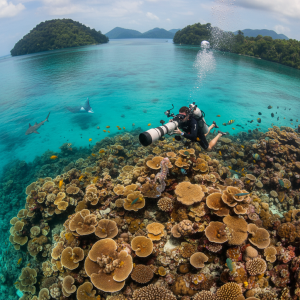
While this is a landscape-focused workshop, the marine environment is the heart of Raja Ampat. The region is part of the Coral Triangle and, as noted by UNESCO, holds the highest recorded diversity of marine life on Earth. The exceptionally clear and calm water in October provides superb conditions for snorkeling. We provide high-quality snorkeling gear, and you are encouraged to bring an underwater camera or housing to capture the vibrant reefs right below the surface during our designated breaks.
The archipelago of Raja Ampat offers a glimpse into a world that is primal, vibrant, and profoundly beautiful. Capturing its essence requires more than just being there; it requires being there at the right time, with the right team and the right strategy. The unique conditions of October provide a rare canvas of mirrored seas and atmospheric skies, an opportunity for the serious photographer to create a portfolio of truly exceptional work. If you are ready to move beyond the ordinary and document one of the planet’s last great wildernesses, we invite you to explore the full details of our flagship raja ampat photo tour. Join us and transform your vision into an memorable collection of images.