Updated: July 2026
How Much Does a Luxury Raja Ampat Photography Trip Cost?
- Accommodation: A private cabin on a traditional phinisi yacht or a villa at an exclusive eco-resort comprises 50-70% of the total cost.
- Expertise: Pricing includes guidance from professional photographers, skilled divemasters, and a full-service crew.
- Logistics: All-inclusive rates cover gourmet meals, diving, excursions, and marine park permits, while international flights remain a separate expense.
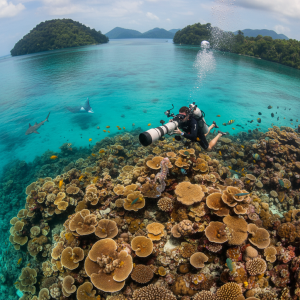
The air is thick with the scent of salt and damp earth. Below the deck of our phinisi, the gentle lapping of the Dampier Strait against the ironwood hull is a constant, soothing rhythm. It’s 5:30 AM. The sun has not yet breached the horizon, but a soft, ethereal glow begins to outline the dramatic karst islands that erupt from the turquoise water. You are here, camera in hand, watching the light change by the second, ready to capture a world that feels entirely untouched by time. This is the singular experience of Raja Ampat. For the discerning photographer, it represents a final frontier. But gaining access to this remote Eden, with the right guidance and in absolute comfort, comes with a specific investment. The question I hear most often from our readers isn’t “Is it worth it?” but rather, “What does it truly cost to execute a photography trip to Raja Ampat at the highest level?”
Deconstructing the Cost: Beyond the Sticker Price
When we discuss the cost of a luxury expedition to Raja Ampat, it’s a conversation about value, not just price. The archipelago, a sprawling collection of over 1,500 islands covering more than 40,000 square kilometers of ocean, is one of the most logistically challenging destinations on the planet. A true luxury experience here isn’t defined by marble bathrooms but by seamless execution, exclusive access, and world-class expertise. The primary cost drivers are clear: the choice between a liveaboard vessel and a land-based resort, the duration of your stay, the season you travel in, and, most critically for this niche, the caliber of your photographic guide. A 12-day journey that allows a photographer to adequately cover the distinct ecosystems of both the northern and southern regions is the gold standard. Anything less, and you’re merely scratching the surface. The price tag, which can easily approach $20,000 per person, directly reflects the immense operational costs of running a five-star operation hundreds of kilometers from the nearest major port. Fuel, provisions, crew salaries, and maintenance are all magnified by the region’s remoteness. What you are investing in is an assurance that every variable is controlled, allowing you to focus entirely on your craft from the moment you step aboard.
The Liveaboard Phinisi: Your Floating Five-Star Studio
For any serious photographer, the most effective and immersive way to document the breadth of Raja Ampat is from the deck of a traditional Indonesian phinisi. These handcrafted, two-masted sailing ships, whose history is deeply woven into the maritime culture of the archipelago, have been masterfully re-engineered into floating boutique hotels. A cabin on a top-tier shared charter, such as those we utilize for our Raja Ampat photo tour, typically ranges from $900 to $1,500 per person, per night. For those seeking ultimate exclusivity, a full private charter of a vessel like the Sequoia or Prana can command upwards of $15,000 per day. These figures are all-inclusive, covering a crew-to-guest ratio that is often better than 1:1, three to four dives per day, and cuisine prepared by chefs who work miracles in a galley kitchen. The real photographic advantage, however, is mobility. As our lead expedition photographer, Michael Friedel, always emphasizes, “On a phinisi, we don’t chase the light; we live in it.” You wake up at the base of the iconic Wayag Islands, shoot the sunrise from the peak, and by afternoon, you are miles away, capturing macro shots of pygmy seahorses on a vibrant reef. Onboard, dedicated, climate-controlled camera rooms with multiple charging stations and editing suites are now standard. This maritime tradition of the Pinisi has been perfectly adapted for the modern photographic explorer.
Private Island Resorts: A Land-Based Alternative
While a liveaboard offers mobility, a land-based stay at one of Raja Ampat’s few luxury eco-resorts presents a different, yet equally valid, proposition. Establishments like Misool Eco Resort in the south or Papua Explorers Dive Resort on Gam Island offer a level of comfort and space that a vessel, by its nature, cannot. An overwater bungalow at one of these properties can range from $700 to over $1,200 per person per night, typically sold in 7- or 10-night packages. The photographic trade-off is significant. While you gain a stable base and intimate access to a world-class house reef—often just steps from your villa—your geographic range becomes limited. Reaching the famed limestone formations of Piaynemo or the lagoons of Wayag from a southern resort requires long and expensive day trips by speedboat. A private charter for a day can cost between $2,500 and $4,000, a considerable addition to your budget. For photographers focused exclusively on underwater macro life or those who prefer a more relaxed pace with fewer relocations, a resort can be an excellent choice. However, to capture the full diversity of landscapes and marine environments that define the region, you would need to book stays at multiple resorts, a logistical puzzle that can quickly become more complex and costly than a single, all-encompassing liveaboard journey. While resort stays are excellent, our expeditions are designed to maximize photographic opportunities across the entire archipelago, something only a dedicated photography liveaboard can truly offer.
The Invisible Costs: Permits, Flights, and Pro-Level Guidance
Beyond the primary expense of accommodation, several ancillary costs are essential to budget for. First, there’s the journey itself. Reaching Sorong (SOQ), the gateway to Raja Ampat, requires multiple flights. From North America or Europe, this typically involves flying to Jakarta (CGK) or Bali (DPS), followed by a domestic flight. Expect to pay between $2,000 and $5,000 for round-trip airfare, depending on your point of origin and class of service. Next are the conservation fees. All visitors must purchase a Marine Park Entry Permit (known locally as a PIN), which costs IDR 700,000 (approximately $45 USD) and is valid for 12 months. Reputable operators, like ourselves, will handle the acquisition of these permits for you. The most critical “invisible” cost—and the one that provides the most value—is the fee for expert guidance. There is a vast difference between a local dive guide and a professional photography expedition leader. The latter is an investment in efficiency and artistry. They possess an encyclopedic knowledge of which sites work best in specific lighting conditions, how tidal patterns will affect visibility, and how to predict marine life behavior. This expertise, which can be valued at $500 to $1,000 per day, is what transforms a simple dive trip into a productive photographic workshop. As the official tourism board notes, this is a destination of immense scale, and expert navigation is key to a successful trip to what they call “the last paradise on earth,” a sentiment detailed on the Indonesia.Travel website.
Seasonality and Itinerary: How Timing Affects Your Budget
Your travel dates will have a material impact on both cost and experience. The prime season for visiting Raja Ampat runs from October through April. During these months, the northwest monsoon brings calmer seas and consistently clear skies, creating ideal conditions for both wide-angle underwater photography—with visibility often exceeding 30 meters—and landscape shots. This is peak season, and accordingly, liveaboard and resort rates are at their highest. You must book 12 to 18 months in advance for the best vessels. The shoulder months of May and September can sometimes offer a slight reduction in price, perhaps 10-15%, but come with a greater chance of rain and potentially choppier surface conditions. The core off-season, from June to August, is when the southeast monsoon makes seas rough, particularly in the southern region of Misool. Many of the top-tier liveaboards relocate to other parts of Indonesia like Komodo during this period, so availability is severely limited. The length of your itinerary is another crucial cost factor. A 7-night trip can provide a taste of either the north or the south, but the two areas are over 150 kilometers apart. To photograph the iconic landscapes of Wayag and the vibrant soft coral reefs of Misool—a key goal for any complete portfolio of this UNESCO World Heritage tentative site—a 10- to 14-night itinerary is non-negotiable. This longer duration allows for a more measured pace and the flexibility to revisit locations if conditions are not perfect on the first attempt.
Quick FAQ on Luxury Raja Ampat Photography Trip Costs
Is a $15,000 budget for one person realistic for a 12-day trip? Yes, this is a solid and realistic budget for a premium, all-inclusive liveaboard experience. This figure would typically cover your private cabin, all meals and diving, professional photo guidance, and park fees. It would not, however, generally include your international flights, trip cancellation insurance, or the rental of high-end underwater camera housings, which can add another $2,000-$4,000 to your total outlay.
What is the single biggest expense on a luxury trip? Without question, the vessel. Your accommodation, whether it’s a cabin on a phinisi or a resort bungalow, represents the largest portion of the cost, often 60-70% of the on-the-ground total. This is due to the enormous operational overhead—fuel, a crew of 15-20 people, gourmet provisions, and constant maintenance—required to deliver a luxury product in one of the world’s most remote marine environments.
Are tips included in the price? Gratuities are not included in the charter price and are left to the guest’s discretion. The industry standard is to tip between 5-10% of the voyage cost, which is then pooled and distributed among the entire crew. For a trip costing $15,000, this would translate to an additional $750 to $1,500, a gesture that is deeply appreciated by the hardworking local crew.
Why is a specialized photography tour more expensive than a standard dive trip? The premium reflects the specialized nature of the expedition. You are paying for a trip curated around the specific needs of a photographer. This includes a flexible itinerary that prioritizes optimal light over a rigid dive schedule, smaller group sizes for unobstructed shooting, and a guide who is not just a divemaster but an accomplished photographer. Our expeditions are curated by award-winning photographers to ensure you are in the right place at precisely the right time for portfolio-worthy images.
Ultimately, a luxury photography expedition to Raja Ampat is an investment. It is an investment in access to the planet’s most biodiverse marine ecosystem, in the expert guidance required to navigate it effectively, and in the seamless comfort that allows you to dedicate every ounce of your energy to the creative process. The cost reflects the immense challenge and privilege of operating within this last frontier. Planning your own photographic journey to the Last Paradise is a significant undertaking. At Rajaampat Phototour Co., we handle every logistical detail, allowing you to focus solely on your craft. Explore our meticulously curated expeditions and see what a dedicated raja ampat photo tour can offer.